ABOUT
WHAT IS LANGUAGEMAP.EU?
LanguageMap.eu grew out of a database/research gap that was noted in the course of the RISE UP Project, a Coordination and Support Action (CSA) under the Horizon Europe funding scheme of the European Commission from Feb 2023 – Jan 2026. The goal of RISE UP was to shed greater light on endangered and minoritised language communities in Europe, to connect them with one another, and to create tools that support community empowerment and collaboration.
Questions that had come up repeatedly throughout the project were
- How many languages are there in the European Union? How many are officially recognised?
- Which ones are endangered? What does ‘endangerment’ mean? How ‘endangered’ are they?
- Which measures have EU countries taken to acknowledge and/or protect minoritised languages and communities? etc.
LanguageMap.eu seeks to lay a foundation of currently available data for future research on these questions. Other results of RISE UP include scientific publications, quantitative and qualitative questionnaire data, a digital toolkit, a collection of minoritised language resources, recordings of public networking events, policy roundtables and Q&As, ‘Voices of Community’ – an album of minoritised language music and poetry, ‘WHAT!?’ – a travelling exhibition of visual art, in-depth interviews with minoritised language artists, and more.
HOW TO USE LANGUAGEMAP.EU?
The data on LanguageMap.eu (and all available language data elsewhere) does not directly reflect reality and should serve as the starting point of inquiry, not a final destination.
Why is that? For three reasons: 1) the inherent nature of mapping is that some details are lost in abstraction, 2) the categories that LanguageMap.eu looks into are complex, and 3) the methods that have been used to elicit this data are fallible and part of wider social, political, and economic dynamics. 1) cannot be helped, but further elucidations on 2) and 3) can be found below.
Complex Categories
To create a language database/map, three questions must be answered. At first glance, their answers seem obvious – but they are not as straightforward as they appear.
What is a language?
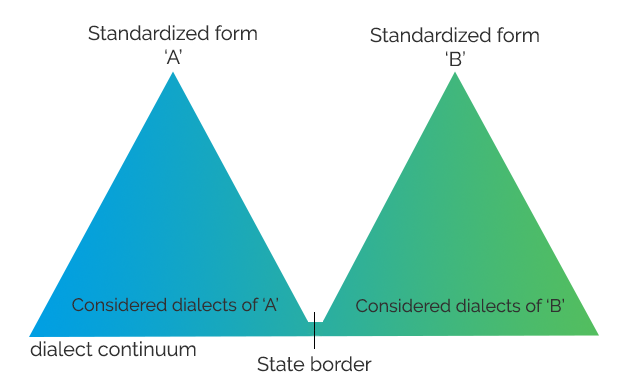
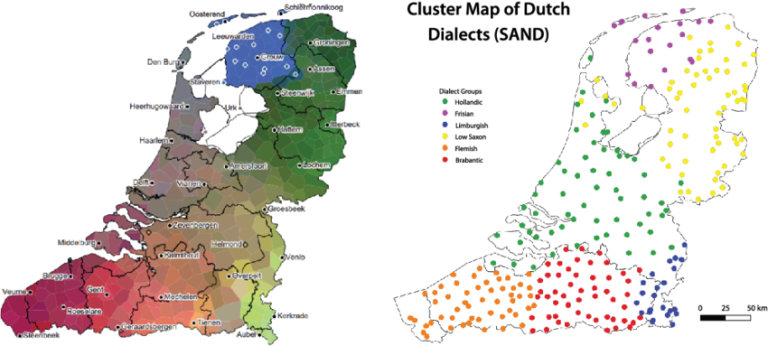
Political Dimension: ‘A language is a dialect with an army’ – while often said tongue-in-cheek, there is some truth to this saying: political structures strongly influence the position, power and support for any given language variety. ‘Swedish’ and ‘Norwegian’, for example, are officially treated as individual languages while ‘Italian’ and ‘Sicilian’, which are linguistically more distinct, are not. For a non-European example, consider the various distinct ‘dialects’ that are grouped together under ‘Chinese’. It should also be mentioned that language varieties often exist in a geographic ‘dialect continuum’. Neighbouring areas tend to have incentive to communicate and understand one another, leading to many mixed language varieties that exist in-between the imagined ideal ‘standard’ varieties. Which of these shades of linguistic grey is then selected to be made official, standard, and codified is once again a political decision.
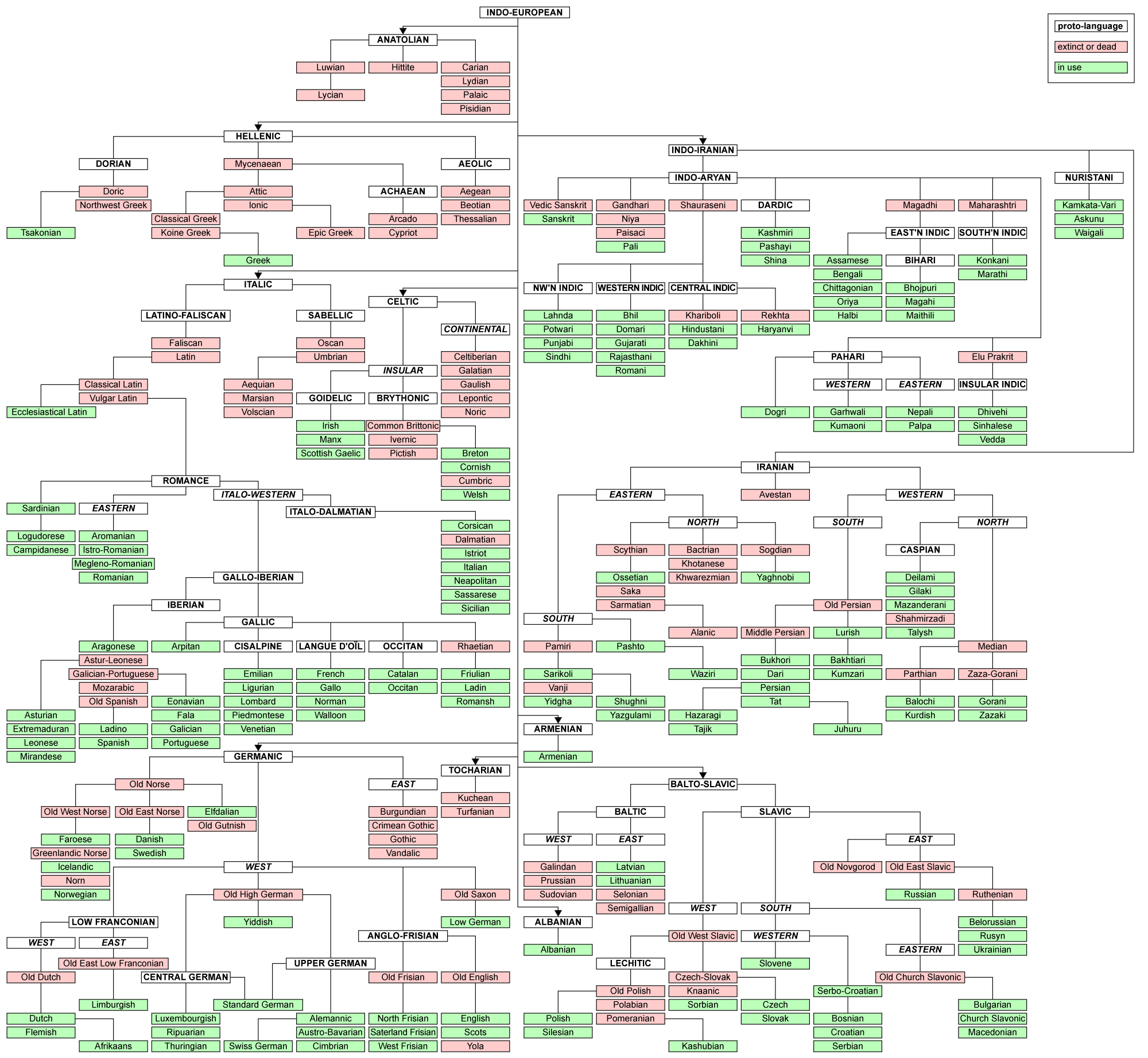
Hierarchical Dimension: Languages can be structured into ‘language families’ based on their linguistic similarities and development over time. This means that our current ‘daughter languages’ descended from older ‘mother languages’ – ‘English’ is classified as a ‘Germanic’ language, for example, because it descends from the ‘Germanic’ branch which, along a different route, also gave rise to modern-day ‘German’. ‘German’ and ‘English’ can thus be considered ‘sister languages.’ Mother languages usually transform into their daughter languages over time, but there are also cases where they still exist alongside one another (e.g. ‘Dutch’ and ‘Afrikaans’). It is once again a matter of definition of where a line should be drawn between languages ‘on the same level’ (Catalan, for example, was once considered a dialect of Occitan) or between languages ‘on different levels’. In a database like this, should there be a separate entry for ‘Gheg’, ‘Tosk’, ‘Arvanitika’ and ‘Arbëreshë’ or should they all be grouped under ‘Albanian’, for example?
We have selected a more "separatist" approach in order to highlight the rich linguistic tapestry of Europe. 'Gheg', 'Tosk', 'Arvanitika' and 'Arbëreshë' are all individually listed under 'languages', with a reference to the 'larger language family' that leads to 'Albanian', a seperate entry that compiles all information on related varieties.
Legal Dimension: The last open question is when exactly a language becomes “recognised” or “official”. Is it when there is a dedicated law for it? When there is a school for it? When there is a standardised writing system and a dictionary? When it can be used in court? When, on the flipside, it is simply declared no longer “illegal” or “banned” (as e.g. Welsh once was in the UK, Romani in Spain, or Breton in France)? When there are dedicated support programmes and institutions for it? There are many facets to recognition and each individual case in each individual country is different.
As the lines of definition and recognition are blurred, these are the lines we have drawn for the purpose of this map/database:
ECRML-Recognised Languages: This category lists all languages covered by the European Charter for Regional and Minority Languages (ECRML), including languages from post-colonial European Overseas Countries and Territories (OCTs). For legal sources, efforts were made to identify the earliest possible ‘wide-range’ legal recognition of these languages on a national level – barring that, documents for partial legal recognition on a national level or the date of the ECRML signing were included.
Official Languages: This category lists the official national language(s) of a country as described in national legislation, often the Constitution. Not all countries have legally declared an official language (e.g. UK, Germany, …) in which case we have listed the ‘de facto’ official language. If a language is only regionally co-official, it is not listed under the Official Languages. All recognised Sign Languages are included under Official Languages in order to raise their visibility in the public eye even if they are not (yet) technically "official" languages.
Non-ECRML Languages: This category lists language varieties that are neither nationally official, nor covered by the ECRML. The languages have been aggregated from languages listed with an ‘established status’ on Ethnologue, the Endangered Languages Project and the UNESCO World Atlas of Languages (as soon as it is back online). Legal sources are included whenever the sources also made reference to them. Your mileage may vary as to whether the varieties listed here should be considered languages, dialects, or something else. We have also included 'dead' languages as long they have an established status in one of the listed sources - they are largely unknown to the wider European population, and it is our hope that they could kick-start an interest in the history of local languages.
While all of the data above is presented alongside additional information acquired through individual research by our team, it still does not fully capture national linguistic nuance, e.g. at which point a 'migrant language' is considered 'a local/ established language', etc.
Recognised Minorities: This category lists minorities in EU countries that are recognised under the Framework Convention for the Protection of National Minorities (FCNM). Legal protection for national minorities often includes legal protection for their language(s).
For an overview of other available language maps and databases and their trustworthiness (including Ethnologue and the UNESCO World Atlas of Languages), please read
Policy Brief #1: Available language databases and maps.
What is Europe?
For the purpose of this map/database, we have looked at data available for all countries of the European Union + Albania, North Macedonia, Serbia & the United Kingdom. This is because RISE UP, the project that led to the creation of LanguageMap.eu, focussed on five selected minoritised language communities: Aranese, Aromanian/Vlach, Burgenland Croatian, Cornish, and Seto.
Aromanian/Vlach is spoken in various communities across the Balkans, including Albania, North Macedonia, and Serbia, while Cornish is spoken in Cornwall, in the UK. By including these countries, we could thus ensure that all RISE UP languages are represented in LanguageMap.eu, as well.
(We did, however, have to manually add ‘Seto’ to our list. It is currently treated as a dialect of Võro both nationally and in Ethnologue – but not by the Seto community.)
To learn more about these communities, you can read through the Community Profiles that we created for the RISE UP Travelling Exhibition (available in 11 languages).
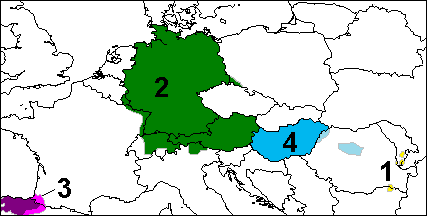
A crucial point regarding geography is that languages do not extend to nor stop at national borders. While for this map (and most available sources), available data is organised by countries, the truth is that many languages are cross-border languages that transcend existing nation-states. Seto, for example, is spoken in Estonia and Russia, and Picard in both France and Belgium. On the other hand, there are also languages that are only spoken in certain regions, rather than across a whole country – one of RISE UP’s languages, for example, Aranese, is only spoken in a single valley in the Pyrenees (Val d'Aran).
To create more accurate geographic depictions of language distributions in the future, it would be necessary to create detailed cross-border and regional maps – perhaps in combination with already existing cross-border cooperation initiatives, such as Interreg or the European Regional Development Fund (ERDF).
This would include in-depth community-based research that invites new perspectives on existing “official data” sets (e.g. on perceptual dialectology – how local people themselves perceive linguistic differences), as well as self-reporting initiatives.
Since multiple languages spoken in post-colonial European Overseas Countries and Territories (OCTs) are included in the ECRML, we have chosen to include them in this database, as well. This also extends to the languages spoken in the Crown Dependencies of the United Kingdom. They cannot, however, be displayed on the Map.
What is a speaker?
The Common European Framework of Reference for Languages (CEFR) classifies languages proficiency from A1 (basic) to C2 (proficient) – but at what level can someone be considered a ‘speaker’? Does someone have to be ‘born into’ a language to count? And do ‘speaker numbers’ tell us everything about a community?
Consider, for example, the difference between three language communities: in Community 1, only people over 60 actively use the language while younger people passively understand it and use a few words here and there. In Community 2, the overall ‘speaker number’ is smaller, but it is still actively being used as a second language alongside the national majority language by all age groups. And in Community 3, the ‘speaker number’ is the smallest, but there has been a surge of interest in the language by young people and ‘new speakers’ who actively work to acquire the language.
Which of these communities would you consider to be the biggest, the most stable, the most endangered, the most vibrant, or the most alive?
As this example shows, speaker numbers can only tell us so much.
And, most importantly, speaker numbers are often false – as the next section will show.
Fallible Methods
Data on speaker numbers is often presented without crucial contextual information, for example:
- when was this data collected (consider Greece, where the last official national language census took place in 1951)
- how was this data collected (was it a national census, a qualitative study, a statistical estimate, a sample size mini-survey, etc.?)
- by whom was this data collected and by whom was this work funded (does the organisation behind it have aims and goals that go beyond the scientifc towards e.g. the religious or political?)
- who was counted as a ‘speaker’ (is it mother tongue speakers, those who use the language at home, those who are able to use the language at all, etc.?)
- which options were available to participants (could they choose from a list or write down an answer? What if their language was not on the list? Were migrant languages included? How many languages could be chosen? Was the question clearly formulated?)
- what were the political circumstances and consequences of answering (are certain population thresholds legally required to ascertain certain rights? Are people discriminated against based on their language? Were promises made if certain results could be reached to prove a point? Was pressure exerted on a community to answer a certain way?)
Similarly, as shown above, the calculations behind ‘levels of endangerment’ can be obtuse, vary greatly, and have been called into question by some communities and linguists. To provide an overview of currently available ‘endangerment rankings’, we have included the levels used by Ethnologue, the UNESCO World Atlas of Languages, and the Endangered Languages Project – we have also explicitly included the category of ‘speaker’ that was evaluated for each ‘speaker number’ count (e.g. sign language users, mother tongue speakers, language used at home, etc.).
To learn more about the factors that influence the ‘objective data’ reported in language databases and maps, please consult
Policy Brief #2: Measures on how to critically and scientifically engage with language databases and maps.
In summary, our database/map comes with specific limitations and gaps of available data. This is intentional and, at the present moment, unavoidable, as we want to and must highlight existing scarcities of information to encourage future research.
The goal is for LanguageMap.eu to serve as a base of presently available data - specifically so that it may be challenged, interrogated, and expanded in the future.
We appreciate your collaboration: LanguageMap.eu is an open and living collection of knowledge. If you know of different, more recent or more accurate sources or if you detect gaps in the currently available data, please share them with us in the comments at the bottom of the relevant page (e.g. under ‘Austria’ or under ‘Basque).
WHAT ARE THE ECRML AND THE FCNM?
ECRML
What is the ECRML?
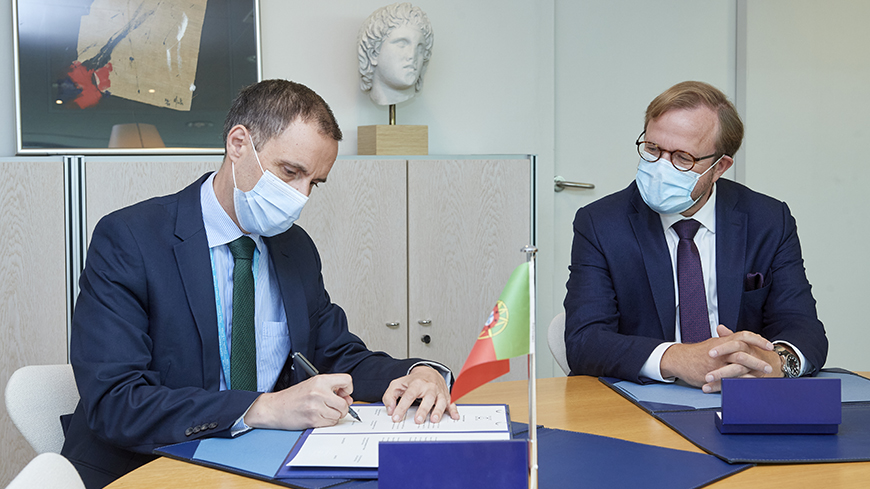
The European Charter for Regional or Minority Languages (ECRML) was adopted under the auspices of the Council of Europe in 1992. It is a European treaty for the protection and promotion of languages that have historically been regional or minoritised in Europe, leaving the exact definition of which languages this includes to each individual States Party.
What are Part II & Part III?
There are two parts to the ECRML. For languages covered under Part II, committed States Parties must follow eight principles and objectives more generally concerned with the language’s protection and promotion. For languages also covered under Part III, more specific measures in the areas of education, law, public services, media, cultural activities and facilities, economic and social life, and transfrontier exchange are required. The status of languages can change over time – during the project lifetime of RISE UP, the protection of Cornish was extended to include Part III, for example.
The text of the Charter can be found here – a list of all languages covered here.
Which countries and languages are included?
So far, 25 States have ratified the Charter, including States from outside of the European Union. Enforcement of the ECRML happens in three steps: 1) signing the Charter, 2) ratifying the Charter, and 3) the Charter entering into force. An overview of all signatures and ratifications can be found here, and they can also be filtered for on LanguageMap.eu.
How is the Charter monitored?
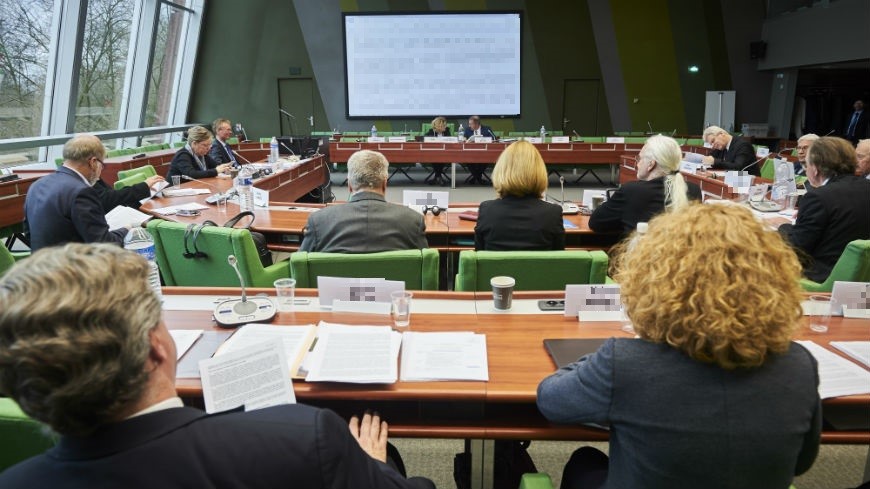
Application of the Charter is monitored by a Committee of Experts that reviews each State Party’s periodical reports, containing detailed information on progresses made and new data that has become available. For in-depth information on officially reported national linguistic landscapes, the ECRML reports, as well as ECRML publications are strongly recommended. Once the reports have been reviewed, recommendations are shared with the State Parties, and periodical follow-up events scheduled to ensure alignment with the Charter. Periodical reports must be submitted every five years, supplemented by mid-cycle documents after 2.5 years in-between.
FCNM
What is the FCNM?
The Framework Convention for the Protection of National Minorities (FCNM) was adopted by the Council of Europe’s Committee of Ministers in 1994 and entered into force in 1998. As stated on its website, the FCNM is ‘the first legally binding multilateral instrument devoted to the protection of national minorities worldwide, and its implementation is monitored by the only international committee dedicated exclusively to minority rights: the Advisory Committee.’
What is covered by the FCNM?
The text of the FCNM can be found here. The Conventions seeks to safeguard and ensure various freedoms for minorities, including the freedoms of thought, conscience, and religion, expression, association, and peaceful assembly, as well as those relating to education, access to media, transfrontier co-operation, and language. An in-depth commentary on the language rights of persons belonging to national minorities under the framework convention can be found here, while a report on how minorities have been defined by different States Parties and why can be found here.
Which countries are included?
At the moment, the Framework is in force in 38 states, including states from outside of the European Union. Enforcement of the FCNM happens in three steps: 1) signing the Framework Convention, 2) ratifying the Framework Convention, and 3) the Framework Convention entering into force. An overview of all signatures and ratifications can be found here, and they can also be filtered for on LanguageMap.eu.
How is the Framework Convention monitored?
Application of the Charter is monitored by the Advisory Committee that reviews each State Party’s periodical reports, containing detailed information on progresses made and new data that has become available. For in-depth information on officially reported data on minorities, the FCNM reports, as well as FCNM publications are strongly recommended. Once the reports have been reviewed, recommendations are shared with the State Parties, and periodical follow-up dialogues scheduled to ensure alignment with the Convention. Periodical reports must be submitted every five years.
Author: Marie-Therese Sauer (MINDS & SPARKS)